
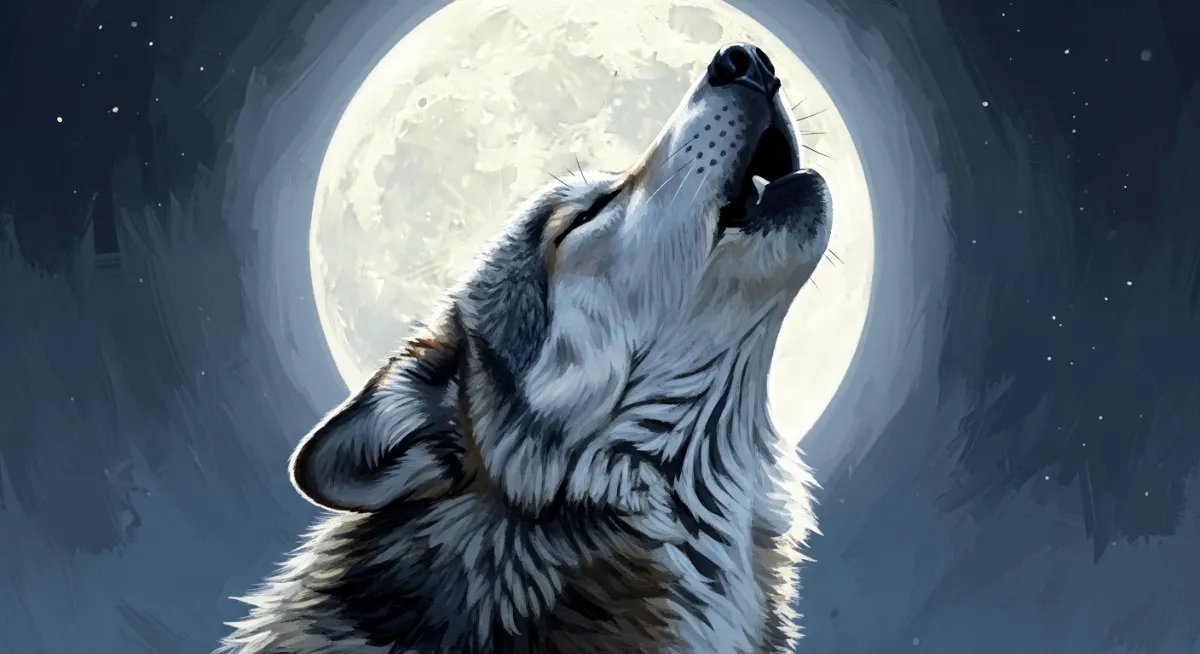
The January Wolf Moon marks the first full moon of the year. This year’s Wolf Moon will occur on January 3 at 10:03 UTC. The January Wolf Moon is also a supermoon. This will make the Moon appear 14% larger and 30% brighter than usual.
Next full moon? Check the full moon calendar 2026.
What Is the Wolf Moon?
January’s full moon is often called the Wolf Moon because people historically noticed wolves howling more frequently at this time of year. For a long time, many believed wolves howled out of hunger during harsh winter months.
However, wolves howl in winter for practical and social reasons. These vocalizations help them locate pack members, strengthen social bonds, mark and defend territory, and coordinate group hunting.
Other traditional names for the January full moon as per the Farmer’s Almanac include:
- Cold Moon (Cree)
- Frost Exploding Moon (Cree)
- Freeze Up Moon (Algonquin)
- Severe Moon (Dakota)
- Hard Moon (Dakota)
- Canada Goose Moon (Tlingit)
- Great Moon (Cree)
- Greetings Moon (Western Abenaki)
- Spirit Moon (Ojibwe)
See full moon names and their meaning for all 12 months of the year.
Cultural & Historical Significance
Native American Traditions: Many tribes named moons after natural markers in their environment. Each name reflected the rhythm of the seasons.
Anglo-Saxon Legacy: In England, the Wolf Moon was also known as the “Moon After Yule.” Yule was a pre-Christian winter festival linked with the winter solstice and mid-winter celebrations.
Astrophotography
If you enjoy astrophotography, try using a long telephoto lens and stable tripod to capture the Moon rising over landscapes, skylines, or natural scenes.
Check out our How to Photograph the Moon Guide.
Moon Phases for January 2026
Full Moon: January 3
Last Quarter: January 10
New Moon: January 18
First Quarter: January 25
See the moon phase calendar for more details.
Leave a Reply