
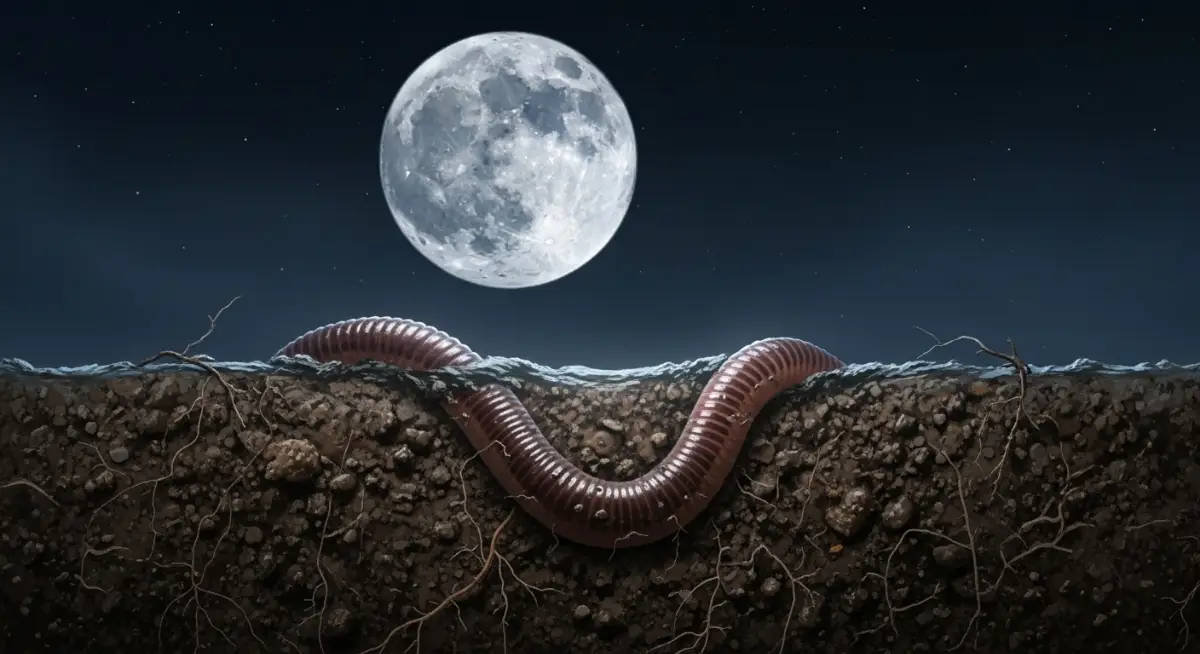
The March full moon, known as the Worm Moon, marks the third full moon of the year. In 2026, the Worm Moon will occur on March 3.
March’s full moon often signals a seasonal transition, as winter slowly loosens its grip and early signs of spring begin to appear across the Northern Hemisphere.
Next full moon? Check the full moon calendar 2026.
Why Is It Called the Worm Moon?
The name “Worm Moon” comes from the time of year when earthworms begin to reappear as the ground starts thawing after winter. Their return brings birds back as well, making this full moon a symbol of renewal and awakening.
However, some historians suggest the name may also refer to beetle larvae or other insects emerging from tree bark as temperatures rise, rather than modern earthworms alone.
Either way, the Worm Moon reflects a natural shift from winter dormancy to early spring activity.
According to the Farmer’s Almanac and Indigenous traditions, the March full moon has many names, including:
- Crow Moon (Algonquin)-marking the return of crows
- Crust Moon-referring to snow that melts by day and freezes by night
- Sugar Moon (Ojibwe)-signaling the start of maple sap season
- Sap Moon-linked to tree sap flowing
- Wind Strong Moon (Pawnee)
- Sore Eyes Moon (Dakota)
See full moon names and meanings for all 12 months of the year.
Cultural & Historical Significance
Native American Traditions: Many tribes named the March full moon after observable natural changes, such as thawing soil, animal behavior, and tree sap flow. These names acted as seasonal calendars tied closely to survival and agriculture.
European Influence: In medieval Europe, this full moon was associated with the end of winter hardships and the anticipation of planting season, making it a symbolic bridge between cold and growth.
In some calendars, the March full moon also plays a role in determining the date of Easter, which is celebrated on the first Sunday after the first full moon following the March equinox.
What Makes the Worm Moon Special?
- It often occurs near the March Equinox, when day and night are nearly equal
- It symbolizes seasonal rebirth and renewal
- Wildlife activity increases, especially birds and insects
- Snow conditions change rapidly, creating dramatic lunar reflections
Moon Phases for March 2026
Full Moon: March 3
Last Quarter: March 10
New Moon: March 18
First Quarter: March 25
Check the complete moon phase calendar for more details.
Leave a Reply