
When is the next lunar eclipse?
The next lunar eclipse is the Penumbral Lunar Eclipse of February 20, 2028, visible from the Americas, Europe, Africa, Asia, Australia and Antarctica. Maximum eclipse occurs at 23:14:06 UTC.
Lunar Eclipse Dates 2026-2030
| Calendar Date | TD of Greatest Eclipse | Eclipse Type | Geographic Region of Eclipse Visibility |
|---|---|---|---|
| 2026 Mar 03 | 11:34:52 | Total | East Asia, Australia, Pacific, Americas |
| 2026 Aug 28 | 04:14:04 | Partial | Eastern Pacific, Americas, Europe, Africa |
| 2027 Feb 20 | 23:14:06 | Penumbral | Americas, Europe, Africa, Asia |
| 2027 Jul 18 | 16:04:09 | Penumbral | Eastern Africa, Asia, Australia, Pacific |
| 2027 Aug 17 | 07:14:59 | Penumbral | Pacific, Americas |
| 2028 Jan 12 | 04:14:13 | Partial | Americas, Europe, Africa |
| 2028 Jul 06 | 18:20:57 | Partial | Europe, Africa, Asia, Australia |
| 2028 Dec 31 | 16:53:15 | Total | Europe, Africa, Asia, Australia, Pacific |
| 2029 Jun 26 | 03:23:22 | Total | Americas, Europe, Africa, Middle East |
| 2029 Dec 20 | 22:43:12 | Total | Americas, Europe, Africa, Asia |
| 2030 Jun 15 | 18:34:34 | Partial | Europe, Africa, Asia, Australia |
| 2030 Dec 09 | 22:28:51 | Penumbral | Americas, Europe, Africa, Asia |
This eclipse calendar 2026–2030 is sourced directly from NASA’s official lunar eclipse decade table (Fred Espenak, NASA/GSFC). All times are TD (Terrestrial Dynamical Time) of greatest eclipse.
Types of lunar eclipses
Total lunar eclipse
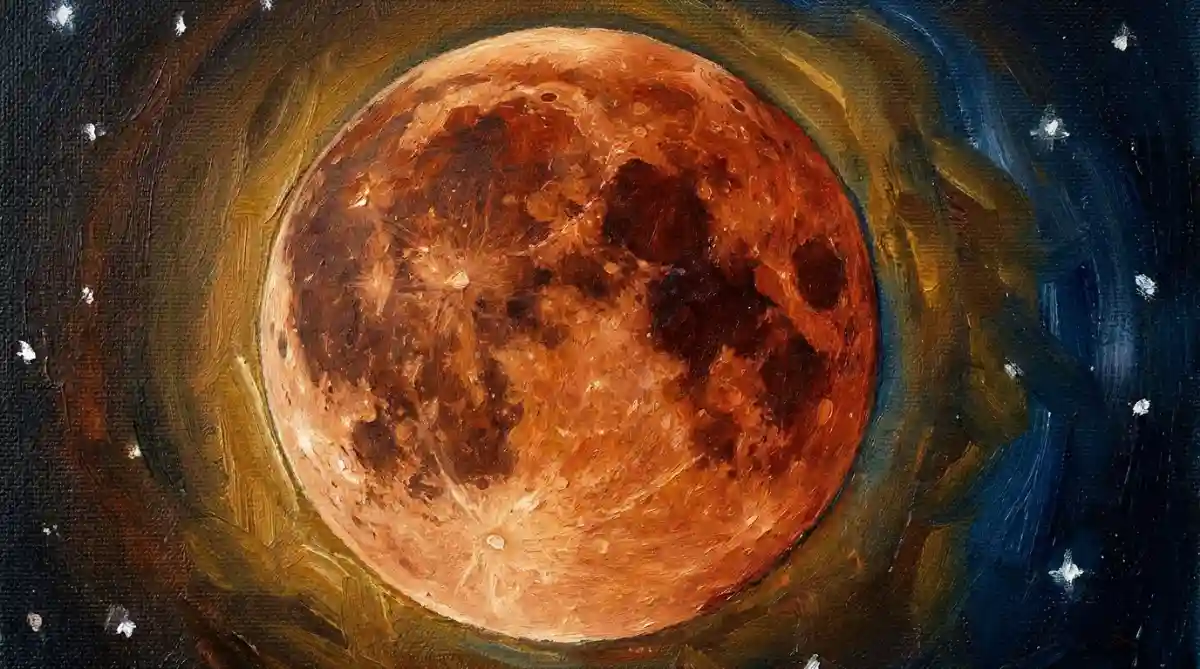
A total lunar eclipse occurs when the Moon passes completely into Earth’s umbra, the darkest part of Earth’s shadow. During totality, the Moon often appears red due to Rayleigh scattering of sunlight through Earth’s atmosphere. This is why it is commonly called a Blood Moon.
Between 2026 and 2030, there are four total lunar eclipses, making this period particularly exciting for skywatchers.
Partial lunar eclipse
A partial lunar eclipse happens when only a portion of the Moon enters Earth’s umbra. Part of the Moon appears darkened while the rest remains illuminated.
There are several partial lunar eclipses during this five-year period, offering excellent viewing opportunities across multiple continents.
Penumbral lunar eclipse
A penumbral lunar eclipse occurs when the Moon passes through Earth’s penumbra, the outer part of the shadow. These eclipses are subtle and may appear as slight dimming of the Moon.
Although less dramatic, penumbral lunar eclipses are still important astronomical events.
Why does the moon turn red during a total lunar eclipse?
During a total lunar eclipse, sunlight passes through Earth’s atmosphere before reaching the Moon. Earth’s atmosphere scatters shorter blue wavelengths and allows longer red wavelengths to bend toward the Moon. This filtered light gives the Moon its reddish appearance, creating the famous Blood Moon effect.
How many eclipses are there in 2026?
4 eclipses total in 2026 – 2 solar and 2 lunar:
| Date | Type |
| February 17, 2026 | Annular solar eclipse |
| March 3, 2026 | Total lunar eclipse |
| August 12, 2026 | Total solar eclipse |
| August 28, 2026 | Partial lunar eclipse |
How often do lunar eclipses occur?
On average, 2 to 4 lunar eclipses happen every year – but not all are visible from any given location, and many are penumbral (subtle). Total lunar eclipses are rarer: roughly once every 1.5 years on average.
Is it safe to watch a lunar eclipse?
Yes – completely safe. Unlike solar eclipses, a lunar eclipse poses zero risk to your eyes. You can stare at the Moon throughout the entire event with no protection. Binoculars or a small telescope will enhance the view, but they’re not required. Just go outside and look up.
How long does a total lunar eclipse last?
The total phase (totality) can last anywhere from a few minutes up to about 1 hour 40 minutes, depending on how centrally the Moon passes through Earth’s shadow. The full event – from first penumbral contact to last – typically spans 4 to 6 hours.
The March 3, 2026 total eclipse had a totality of ~59 minutes, with the entire partial-phase window spanning about 3 hours 27 minutes.
Lunar eclipse vs solar eclipse
Both involve alignments of the Sun, Earth, and Moon – but the mechanics differ. In a lunar eclipse, Earth sits between the Sun and Moon, casting its shadow onto the Moon. In a solar eclipse, the Moon sits between the Sun and Earth, blocking sunlight from reaching parts of Earth’s surface.
Lunar eclipses are visible from anywhere on the night side of Earth – roughly half the planet at once. Solar eclipses cast a much narrower shadow path, often just a few hundred kilometres wide. That’s why solar and lunar eclipse 2026 events have very different visibility maps.
Another key difference: lunar eclipses are safe to watch directly; solar eclipses require certified eclipse glasses during the partial and annular phases.
FAQ’s ❓
What is a blood moon?
A blood moon is a total lunar eclipse during which the Moon turns red or orange. The colour comes from sunlight bending through Earth’s atmosphere – the same physics that makes sunsets red – and illuminating the Moon from all sides simultaneously.
Can everyone see a lunar eclipse?
No. Each eclipse is only visible from the half of Earth where the Moon is above the horizon at the time. The March 3, 2026 total eclipse was visible from East Asia, Australia, the Pacific, and the Americas. The August 28 partial eclipse will be visible from North and South America, Europe, and Africa.
Is it safe to watch a lunar eclipse?
Yes, completely safe. You can watch a lunar eclipse with the naked eye, binoculars, or a telescope without any protective filters. No special equipment is needed.
How long does a lunar eclipse last?
A lunar eclipse typically lasts 4–6 hours. Totality itself lasts up to about 1 hour 40 minutes. The March 3, 2026 total eclipse had a totality of roughly 59 minutes.
What is the difference between a lunar eclipse and a solar eclipse?
In a lunar eclipse, Earth’s shadow falls on the Moon. In a solar eclipse, the Moon’s shadow falls on Earth.