
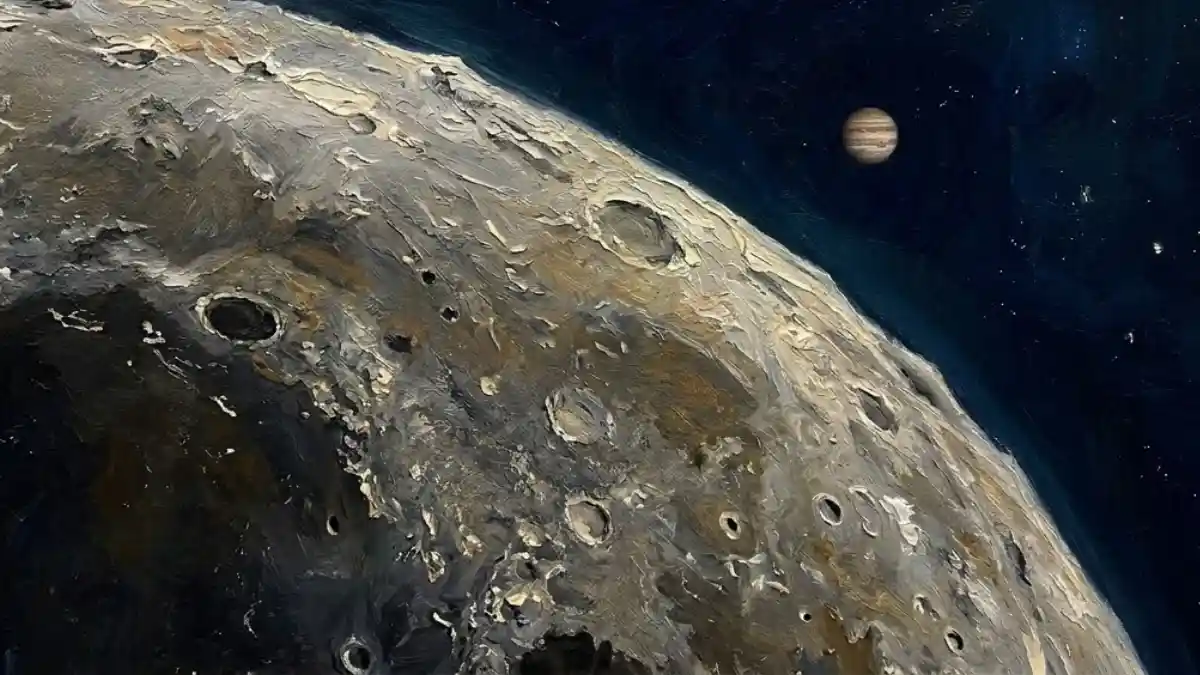
What Is a Lunar Occultation?
A lunar occultation occurs when the Moon passes directly in front of a star or planet, temporarily hiding it from view.
The Moon regularly passes in front of bright stars such as Antares, Regulus, Elnath, and Nunki, as well as planets including Venus, Mars, and Jupiter. Some of these events are visible with the naked eye, while binoculars or a telescope can make the disappearance and reappearance much easier to follow.
The event has two main stages. Disappearance occurs when the object moves behind the Moon’s limb, while reappearance occurs when it emerges from behind the opposite side. The two moments can be separated by only a few minutes for a star, although the exact duration varies with the object and observing location.
Lunar occultations are different from lunar eclipses. During a lunar eclipse, Earth passes between the Sun and Moon and Earth’s shadow falls across the lunar surface. During an occultation, the Moon itself blocks a star or planet from an observer’s view.
Lunar Occultations 2026
| Date | Object | Event time (UTC) | Visibility |
|---|---|---|---|
| September 8, 2026 | Jupiter | 18:13 UTC | Regional |
| September 14, 2026 | Venus | 11:10 UTC | Regional |
| September 17, 2026 | Antares | 12:17 UTC | Regional |
| September 20, 2026 | Nunki | 06:33 UTC | Regional |
| October 5, 2026 | Mars | 05:30 UTC | Regional |
| October 6, 2026 | Jupiter | 10:18 UTC | Regional |
| October 7, 2026 | Regulus | 02:57 UTC | Regional |
| October 14, 2026 | Antares | 13:24 UTC | Regional |
| October 17, 2026 | Nunki | 12:09 UTC | Regional |
| October 29, 2026 | Elnath | — | Regional |
| November 2, 2026 | Mars | 14:23 UTC | Regional |
| November 3, 2026 | Jupiter | 22:11 UTC | Regional |
| November 7, 2026 | Venus | 11:31 UTC | Regional |
| November 11, 2026 | Antares | 03:58 UTC | Regional |
| November 13, 2026 | Nunki | 14:31 UTC | Regional |
| November 25, 2026 | Elnath | — | Regional |
| November 30, 2026 | Jupiter | 09:18 UTC | Regional |
| December 11, 2026 | Nunki | — | Regional |
| December 23, 2026 | Elnath | — | Regional |
Note: The times in this table are the approximate.
Lunar Occultations 2027
Lunar occultations continue throughout 2027. The Moon again passes in front of bright stars and planets at regular intervals as its orbit carries it across the same regions of the sky.
| Date | Object | Event time (UTC) | Visibility |
|---|---|---|---|
| January 4, 2027 | Antares | 16:34 UTC | Regional |
| January 19, 2027 | Beta Tauri (Elnath) | — | Regional |
| January 31, 2027 | Antares | — | Regional |
| February 8, 2027 | Mercury | 03:36 UTC | Regional |
| February 20, 2027 | Jupiter | 05:46 UTC | Regional |
| February 28, 2027 | Antares | 06:09 UTC | Regional |
| March 2, 2027 | Nunki | — | Regional |
| March 15, 2027 | Beta Tauri (Elnath) | — | Regional |
| March 19, 2027 | Jupiter | 10:05 UTC | Regional |
| March 27, 2027 | Antares | 09:27 UTC | Regional |
| March 30, 2027 | Nunki | — | Regional |
| April 15, 2027 | Jupiter | 10:45 UTC | Regional |
| April 23, 2027 | Antares | — | Regional |
| April 26, 2027 | Nunki | — | Regional |
| May 12, 2027 | Jupiter | 06:42 UTC | Regional |
| May 21, 2027 | Antares | 06:08 UTC | Regional |
| May 23, 2027 | Nunki | 17:33 UTC | Regional |
| June 17, 2027 | Antares | 11:46 UTC | Regional |
| June 20, 2027 | Nunki | 14:42 UTC | Regional |
| July 14, 2027 | Antares | 19:34 UTC | Regional |
| July 17, 2027 | Nunki | — | Regional |
| August 10, 2027 | Antares | 01:31 UTC | Regional |
| August 13, 2027 | Nunki | — | Regional |
| September 7, 2027 | Antares | 08:34 UTC | Regional |
| September 9, 2027 | Nunki | — | Regional |
| October 31, 2027 | Antares | 01:43 UTC | Regional |
| November 30, 2027 | Venus | 13:20 UTC | Regional |
| December 29, 2027 | Mars | 12:10 UTC | Regional |
Note: The times in this table are the approximate.
How to Watch a Lunar Occultation
A lunar occultation does not require specialized equipment. Bright objects such as Venus, Jupiter, Mars, Regulus and Antares can be easy to locate, although a telescope or binoculars can make the event much more impressive.
Find the Moon before the predicted disappearance time and keep the object in view. The disappearance can happen suddenly, particularly when the object reaches the Moon’s dark limb. The reappearance is also worth watching because the object can seem to emerge almost instantaneously.
For the best results, use a stable tripod for binoculars or a telescope and check the local weather and Moon altitude before the event.
Lunar Occultation vs. Conjunction
A conjunction occurs when two objects appear close together in the sky. An occultation is a more specific event in which the foreground object actually passes in front of the background object from a particular observing location.
This means every lunar occultation also produces a close apparent approach, but a close approach does not necessarily produce an occultation for every observer.
For example, the Moon and Jupiter may appear very close together across a large region of Earth, while only observers inside the occultation path see Jupiter disappear behind the Moon.
Best Lunar Occultations to Watch in 2026–2027
Some events stand out because they involve bright planets or first-magnitude stars.
Jupiter: Jupiter is involved in several occultations in 2026 and 2027. These events are particularly interesting because Jupiter is bright enough to remain easy to locate even when the sky is not completely dark.
Venus: The Moon occults Venus on September 14 and November 7, 2026. Venus is exceptionally bright, making these among the most visually striking planetary occultations of the period.
Mars: Mars is occulted by the Moon on several occasions, including October and November 2026 and December 2027.
Antares: The Moon repeatedly passes in front of Antares, the bright red star marking the heart of Scorpius. These recurring occultations provide opportunities to observe how the Moon’s position changes from month to month.
Regulus: The Moon also repeatedly crosses the line of sight to Regulus, the brightest star in Leo. The October 7, 2026 event is one of the notable Regulus occultations of this period.