
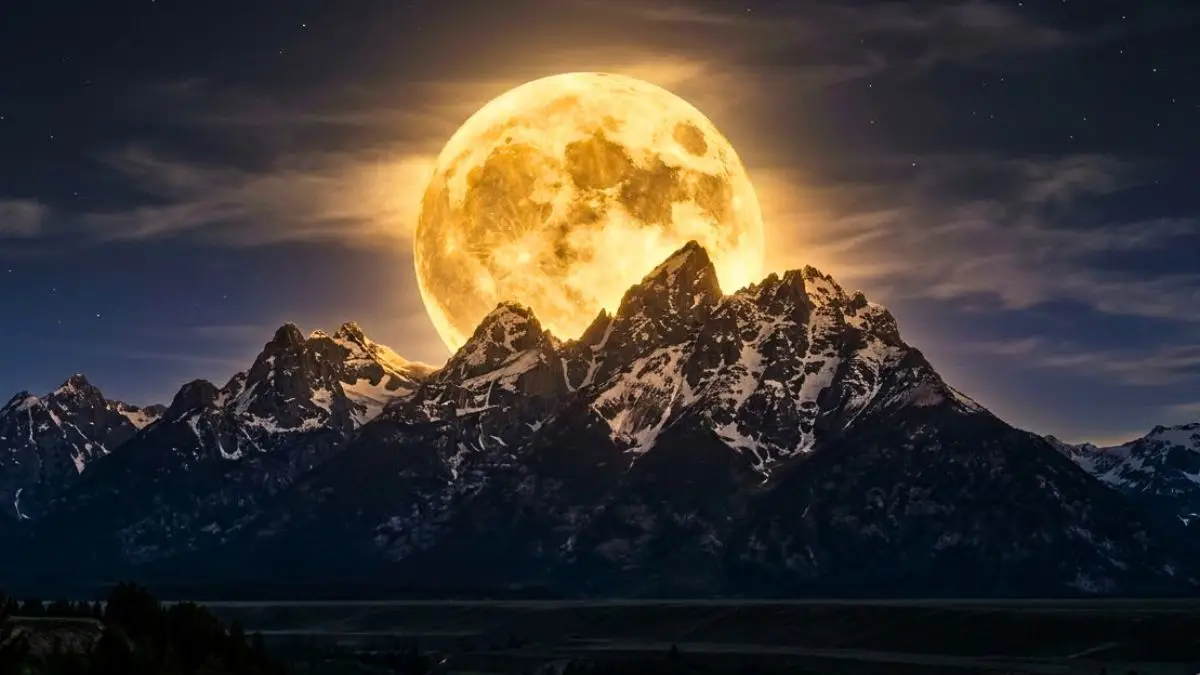
Quick Facts about the Hunter’s Moon
- Hunter’s Moon Date: October 26, 2026
- Peak illumination: 04:11 UTC
- Traditional Name: Hunter’s Moon
- Named After: The traditional autumn hunting season.
- Moon Sign: Taurus
- Best viewing: Around moonrise on the evening of October 25 and October 26
- Other names: Drying Rice Moon, Falling Leaves Moon, Freezing Moon, Ice Moon, Seed Fall Moon
The October Full Moon is traditionally called the Hunter’s Moon. It follows the Harvest Moon and was associated with hunting and preserving meat for the coming winter. In 2026, it reaches peak illumination at 04:11 UTC on October 26.
For the dates of every full moon in 2026, see our Full Moon Calendar.
When is the Hunter’s Moon 2026?
The Hunter’s Moon reaches peak illumination on Monday, October 26, 2026, at 04:11 UTC. In India, this occurs at 9:41 AM IST on October 26.
Although the exact full moon occurs in the morning, the moon will appear nearly full on the nights before and after. The best opportunity to watch it is around sunset on October 25, when the full moon rises in the eastern sky.
The full moon occurs when the moon is opposite the sun as seen from Earth. The entire lunar disk facing Earth is illuminated, making the Moon visible throughout most of the night.
You can check the Moon’s exact illumination, distance, age, azimuth, and other details for any date on Moon Age Today.
Why Is It Called the Hunter’s Moon?
The Hunter’s Moon is the traditional name for the full moon following the Harvest Moon.
By October, many crops had been harvested, and fields were cleared. This made animals easier to spot, while deer and other game had spent the warmer months feeding and building up body reserves. Hunters used the additional light from the bright full moon to track animals and prepare food for the coming winter.
The name reflects the seasonal cycle of hunting, food preservation, and preparation for winter rather than an astronomical change in the Moon itself.
How to watch the Hunter’s Moon
The full moon is easy to observe without a telescope. Find a location with a clear view toward the eastern horizon and watch around sunset as the moon rises.
The moon can appear orange or yellow when it is close to the horizon. This happens because its light travels through more of Earth’s atmosphere, which scatters shorter wavelengths and leaves more reddish and yellow light reaching your eyes.
For exact local moonrise and moonset times, use our Moonrise and Moonset Time Calculator.
Is the Hunter’s Moon a Supermoon?
The October 2026 Hunter’s Moon is not a supermoon. The Moon is not close enough to perigee at the time of the full moon to meet the commonly used supermoon definition.
Its apparent size will therefore be close to the Moon’s normal size as seen from Earth.
Other Traditional Names of the October Full Moon
Different cultures have used seasonal names for the October Full Moon. Some traditional names include
- Drying Rice Moon
- Falling Leaves Moon
- Freezing Moon
- Ice Moon
- Seed Fall Moon
- Migrating Moon
These names describe seasonal changes, harvesting activities, falling leaves, colder temperatures, and animal or bird migration.
Lunar Eclipse Details
There is no lunar eclipse during the October 2026 full moon.
The Full Moon on October 26 occurs away from the alignment needed for Earth’s shadow to fall across the Moon. The 2026 lunar eclipses occur earlier in the year, including the total lunar eclipse in March and the partial lunar eclipse in August.
See our Lunar Eclipse Calendar for upcoming lunar eclipses and their visibility.
Moon Phases for October 2026
| Moon Phase | Date | Time (UTC) |
|---|---|---|
| Last Quarter 🌗 | October 3 | 13:25 |
| New Moon 🌑 | October 10 | 15:50 |
| First Quarter 🌓 | October 18 | 16:12 |
| Full Moon 🌕 | October 26 | 04:11 |
The October Full Moon is the fourth and final primary lunar phase of the month.
See the complete Moon Phase Calendar for daily lunar phases throughout 2026.
Other Must-Watch Sky Events in October 2026
- October 4: Saturn reaches opposition, making it visible for much of the night and providing one of the year’s better opportunities to observe the planet and its rings.
- October 5: The waning crescent moon passes close to Mars before sunrise.
- October 6: A thin crescent moon appears close to Jupiter before sunrise.
- October 8–9: The Draconid meteor shower reaches its peak under almost moonless skies, offering favorable conditions for meteor watching.
- October 10–12: Mars passes through the Beehive Cluster in Cancer, making binoculars useful for viewing the pairing.
- October 21–22: The Orionid meteor shower peaks. Bright moonlight will hide some of the fainter meteors, so the hours before dawn after moonset offer better conditions.
- October 26: The Hunter’s Moon reaches peak illumination at 04:11 UTC.
- October 27–28: The Moon passes close to the Pleiades star cluster, also known as the Seven Sisters.
Leave a Reply